Case Study

Royal Sussex
County Hospital

Strong, reliable connectivity is essential across any large site but when offices are based underground with no way of keeping updated, communication lines become essential for health and safety.

The Royal Sussex County Hospital in Brighton is undergoing a significant development project known as the 3Ts Redevelopment – focusing on updating the trauma, tertiary and teaching departments.

The project aims to replace all the buildings on the front half of the hospital with new clinical buildings and a service yard. TrellisWorks was appointed by contractors Laing O’Rourke in 2022 to support with the Louisa Martindale Building, which opened in Spring 2023, and is the first and largest stage of the redevelopment.

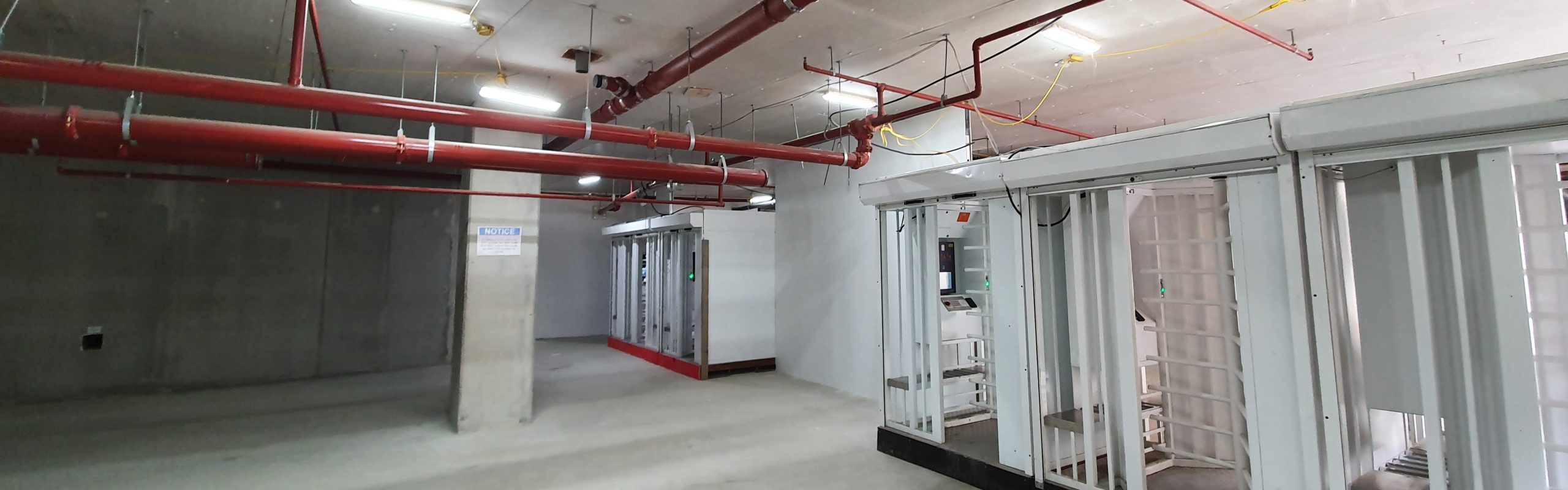
The site layout and nature of the redevelopment meant a number of the team were working from the basement of the building, below ground level and surrounded by thick concrete.

They needed a way to boost mobile signal to not only support day to day operations but protect and maintain safety on the site.

The Challenges

  • Installation challenges

    The site covered a huge expanse and as a working construction site any cables and infrastructure needed to be protected to prevent accidental damage from machinery

  • Keeping workers connected

    With building work ongoing and office staff based on site communication was vital in keeping the project moving and health and safety compliant

  • Maintaining Ofcom compliance

    Not all mobile signal boosting equipment is the same and getting the right solution was crucial in making sure that the site remained Ofcom compliant and didn’t risk heavy fines

  • Signal completely blocked

    Built from thick concrete and already in a heavily congested area of the city both 4G connectivity and all mobile phone signals were completely blocked

Overview

The multi-million pound redevelopment of the Royal Sussex County Hospital is currently one of the largest NHS projects in the country. Home to England’s oldest acute NHS ward portions of the site date back to 1828. This meant it first came into use 20 years before Florence Nightingale became a nurse. The project aims to redevelop all the buildings at the front of the site providing modern, state of the art new facilities. TrellisWorks were appointed during the first phase of the project and as a mixture of redevelopment and new construction it was important that any work did not disrupt day to day operations with the site remaining open throughout.

Located to the East of Brighton the site already suffered from heavily congested signal and thick concrete construction, its underground location and surrounding trees all made connectivity extremely challenging. The site office was also located in the basement.

With no cellular connection office staff and workers were struggling to stay connected and it meant the day-to-day management of the site was impaired.

The plan was to create an Ofcom compliant mobile signal which could be used across the whole of the construction site to keep teams connected. This was not only for health and safety but also necessary to allow office staff to keep in contact and drive efficiencies by linking up teams across the project.

The solution

Presented with a complex set of challenges TrellisWorks carried out a thorough site survey to assess the best solution for the job. A series of mobile boosters were identified and TrellisWorks carried out a full audit to identify the optimum location and direction for 5 antenna to be installed. To meet the required signal strength, it was necessary to install a cable run of over 50m from the server antenna location in an office, via the hub in a corridor, and then across a large access room. It would then go out the vehicle access ramp in the basement to detect the network signal. All the cabling was ceiling mounted to avoid being accidentally damaged or dislodged by site traffic.


The Successes

  • Strong connectivity

    Communication was reinstated providing a strong, reliable mobile signal

  • Hospital remained open during works

    Completed on time and with no disruption to patients

  • Construction site suitable

    By mounting the cabling and carefully positioning antenna around the needs of the site it eradicated the need for repairs

View Case Study

Case Studies

Royal Sussex County Hospital

A complex, underground construction site in a working hospital needed a solution that could deliver and fast

Case Study 1/4

Keeping colleges connected with network spanning 13 km

West Midlands largest 16-19 education provider needed help keeping connected across multiple sites spanning 13km.

Case Study 2/4

Optimising struggling CCTV network in Derbyshire Dales beauty spot

Derbyshire Dales District Council turned to TrellisWorks to help reconfigure a failing CCTV network which had more than trebled in size since it was first installed.

Case Study 3/4

Boosting connectivity at UK racecourses

Using point-to-multipoint wireless technology in the 60ghz frequency band, a dedicated standalone network for the bookmaker stands was deployed. This solution provided a private, fast, uncongested solution to eliminate congestion, latency and service interruption.

Case Study 4/4

Royal Sussex County Hospital

A complex, underground construction site in a working hospital needed a solution that could deliver and fast

Case Study 1/4

Keeping colleges connected with network spanning 13 km

West Midlands largest 16-19 education provider needed help keeping connected across multiple sites spanning 13km.

Case Study 2/4

Optimising struggling CCTV network in Derbyshire Dales beauty spot

Derbyshire Dales District Council turned to TrellisWorks to help reconfigure a failing CCTV network which had more than trebled in size since it was first installed.

Case Study 3/4

Boosting connectivity at UK racecourses

Using point-to-multipoint wireless technology in the 60ghz frequency band, a dedicated standalone network for the bookmaker stands was deployed. This solution provided a private, fast, uncongested solution to eliminate congestion, latency and service interruption.

Case Study 4/4