In the UK 73% of companies spend between 21% and 50% of their operating budget on technology investment – the highest level in Europe. In manufacturing 83% of companies see automation increasing in the industry as a way of driving efficiencies and business growth.
However, this strong growth in digitalisation isn’t always being built on a stable foundation causing increased down time and failures.
In the UK 80% of industrial businesses experienced unplanned downtime between 2020 and 2024. Each incident lasts an average of four hours. This means machine failures are estimated to account for 3% of working days lost in manufacturing – around 49 hours per company per year.
The causes of downtime are also shifting from traditional wear and tear to more connectivity focused failures. Downtime is increasingly being tied to software and system faults in interconnected environments or cybersecurity fails from a lack of resiliency.
Technology is only as good as the network supporting it
Technology and automation may be driving greater efficiencies but without the correct system powering it they are vulnerable to faults.
Real-time monitoring and machine learning (ML) all require systems to constantly be communicating with one another, analysing large datasets and detecting defects.
Legacy systems aren’t built for these increased demands. Adding additional requirements can easily overload the system and leave it vulnerable.
Connection is no longer static
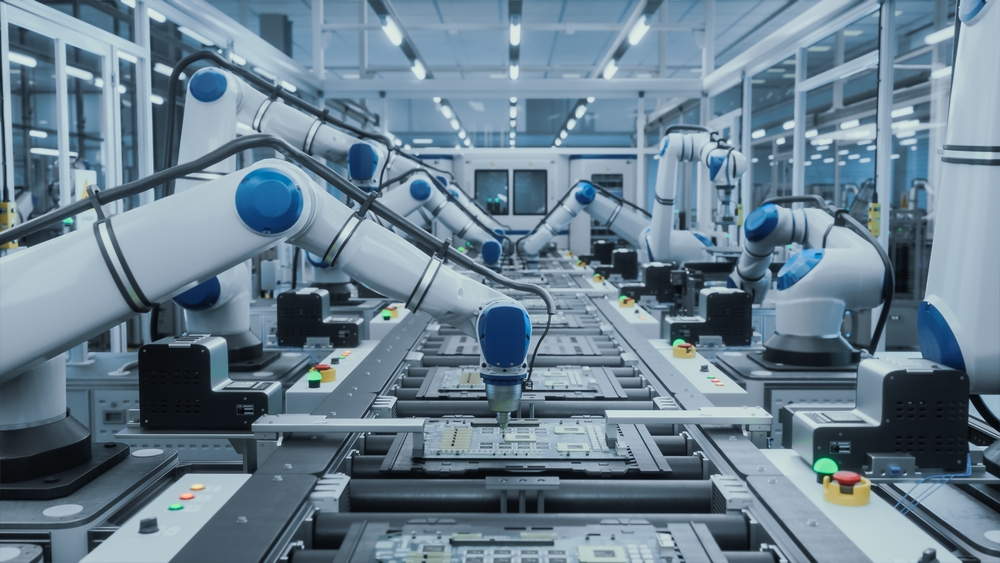
Modern factories are no longer built around individual machines and cells on production lines. Multiple robots are working together creating connected production environments capable of monitoring operations, identifying problems and supporting faster decision making.
Roaming robots and automated machine learning mean that connection demands are no longer static and predictable. Autonomous mobile robots (AMRs), cobots, wireless sensors and cloud-controlled automation all require more dynamic connectivity. Systems now need to be prepared for changing requirements and provide instant communications across multiple platforms.
It means wireless solutions such as Private 5G are becoming part of production infrastructure rather than simply an employee wi-fi system.
More sophisticated systems need to allow robots to roam between wireless coverage areas without interruption and segment different functions to restrict communication when necessary.
Resilience is key in protecting operations
With so much of the manufacturing floor automated cyber security and network resilience is crucial in reducing downtime and risk. Legacy systems were often built to assume that everything on the factory floor can be trusted. When you introduce wireless robots, vision systems, remote support and IoT sensors these assumptions are dangerous and leave systems vulnerable.
Whole operations can now be shut down if connectivity fails as automation is built into every area of the business.
Back ups and cyber security are now essential components of manufacturing sites. Multiple solutions provide greater security with high-capacity wired ethernet, private cellular, satellite and radio solutions coexisting to drive scalability and reliability.
How can manufacturers future proof their connectivity?
Manufacturing technology is rapidly developing with modern factory floors looking far more high tech than even a few years ago. As the technology continues to grow businesses risk being left behind if they don’t build the connectivity solutions that can support modern operations. Speed, latency and security are all crucial to keep AI and robotic capabilities functioning.
If manufacturing is to truly embrace the capabilities of modern AI operations, they need to be futureproofing now to build connectivity that can grow with increasing demand. Networks need to have the scope to grow with technology or they will leave operations vulnerable to faults and slow to react.